

SOCIAL RECONSTRUCTION OF A TECHNOSCIENCE?:
THE GREENING OF CHEMISTRY(1)
E. J. Woodhouse
STS, RPI, Troy NY 12180
woodhouse@rpi.edu, 518-276-8506
"Organic chemistry textbooks a generation from now will be unrecognizable compared with today's standard texts," predicts one of the progenitors of what is coming to be called "green chemistry."(2) As the name implies, the green chemistry movement aims to make humanity's approach to chemicals -- especially synthetic organic chemicals -- environmentally benign or "sustainable." With little controversy or publicity, in the past few years has begun to emerge what could turn out to be a profound transformation in the methods, raw materials, byproducts, and end products of chemical synthesis.
This paper is a preliminary report of research intended to assess the technical potentials, determine what has blocked more rapid development, offer policy proposals to accelerate inquiries and applications in this field, and assess some of the implications of the case for conceptual issues in political science thinking about science. Deliberately accelerating green chemistry presumably would involve changes in government regulations or taxes to provide incentives and mandates to industry; but I need to understand enough of the technical issues to discern where the bottlenecks have been and where they now are. This paper therefore is devoted largely to describing selected aspects of the emerging field.
At this early date in my research trajectory, I have only preliminary glimpses of the policy options that potentially might help accelerate chemical greening. But it already is apparent that it would be worth considering certain changes in university curricula, accreditation practices, tax laws, and environmental regulations. (See Section III.) In closing, I offer tentative thoughts regarding some of the more general implications of this case, particularly in regard to democratic accountability of scientific institutions.
I. RECENT DEVELOPMENTS IN GREEN CHEMISTRY
An exaggeration that makes the point is to say that 20th century chemistry was based on the following "formula":
* Start with a petroleum-based feedstock;
* Dissolve it;
* Add a reagent;
* React the compounds stoichiometrically to produce intermediate chemicals;
* Put these through a long series of additional reactions;
* To yield megaton quantities
* Of potentially dangerous final products,
* Released into ecosystems and human environments without knowledge of long-term effects,
* Without going through gradual scale-up to learn from experience,
* In the process creating millions of tons of hazardous wastes as byproducts.
Considering that the above "formula" appears almost absurd, why was chemistry not instead based on a very different approach, such as:
* Design each new molecule so as to accelerate both excretion from living organisms and
biodegradation in ecosystems;
* Create the chemical from a carbohydrate (sugar/starch/cellulose) or oleic (oily/fatty)
feedstock;
* Rely on a catalyst, often biological,
* In a small-scale process
* That uses no solvents or benign ones
* And requires only a few steps,
* Creating little or no hazardous waste as byproducts,
* To yield small quantities of the new chemical for exhaustive toxicology and other testing
* Followed by very gradual scale-up and learning by doing.
Of course, we all know many of the reasons why the "brown chemistry" formula predominated in the past, but what of the future: Is the hope of green chemistry a fanciful notion? No one in 1998 can be sure, but it appears that the second chemical scenario sketched above may potentially be within the capacities of a revamped chemistry and chemical engineering.(3) Whether the chemical industry will embrace the technical potentials seems a good deal less clear.
In this section, I want to give several examples of the work taking place under the heading of green chemistry, and a useful resource for that comes from several categories of "Presidential Green Chemistry Challenge Awards" given annually beginning in 1996 by the U.S. Environmental Protection Agency.(4)
The awards are for advances in alternative synthetic pathways, safer solvents and reaction conditions, designing safer chemicals, and other innovations in the design of chemicals and chemical processing. This EPA activity differs from almost everything else done by the agency's more than ten thousand staff in that it focuses not on cleanup or other correction of problems already existing, and not even on containing future exposures by cleaning up waste water or scrubbing smoke stacks. Instead, the focus is on prevention of problems before they occur - by designing or redesigning chemicals and chemical production processes in such a way as to be inherently benign.
The first Alternative Synthetic Pathways Award went to the Monsanto Company for "catalytic dehydrogenation of diethanolamine." The technical details are arcane, of course, but the basic story is simple: the new technique allows Roundup© herbicide (an environmentally friendly product -- as herbicides go) to be produced in a less dangerous way.(5)
In the new process
The raw materials have low volatility and are less toxic (and) the dehydrogenation process is endothermic and therefore does not present danger of runaway. Moreover, this "zero-waste" route to DSIDA produces a product stream that, after filtration of catalyst, is of such high quality that no purification or waste cut is necessary The new technology represents a major breakthrough....because it avoids the use of cyanide and formaldehyde, is safer to operate, produces higher overall yield, and has fewer process steps (EPA July 1996, p. 2).
The key to the innovation was a new catalysis technology, said to provide a general method for conversion of primary alcohols to carboxylic acid salts -- potentially applicable "to the preparation of many other agricultural, commodity, specialty, and pharmaceutical chemicals."(6)
The 1997 award in this category went to a more familiar contender: ibuprofen, the well-known painkiller sold as Advil and Motrin. The previous process for synthesizing ibuprofen involved massive quantities of solvents and achieved only 40 percent efficiency (= 60 percent waste products), whereas the new process achieves nearly 99 percent efficiency (counting 19 percent recovery of the byproduct acetic acid). As the certificate of award put it, "The BHC ibuprofen process revolutionized bulk pharmaceutical manufacturing .(It) provides an elegant solution to a prevalent problem: how to avoid the large quantities of solvents and wastes associated with the traditional stoichiometric use of auxiliary chemicals when effecting chemical conversions."(7)
The Alternative Solvents/Reaction Conditions Award was awarded in 1996 to Dow Chemical for developing processes using carbon dioxide as the blowing agent for manufacture of polystyrene foam sheet packaging material. The market for polystyrene foam sheet had grown to 700 million pounds for the U.S. alone by 1995, principally for egg cartons and fast food containers. (The CO2 is derived from existing sources such as ammonia plants and natural gas wells, therefore making no contribution to climate change.) The Dow technology allowed elimination of 3.5 million pounds of chlorofluorocarbon blowing agents per year, chemicals that contributed to ozone depletion, global warming, and ground level smog.
The award for Designing Safer Chemicals went to Rohm and Haas, another major chemical company, for designing a safer marine antifouling compound. Unwanted growth of plants and animals on ship hulls costs the shipping industry an estimated $3 billion annually, primarily from increased fuel consumption due to hydrodynamic drag. Such waste of fuel obviously contributes to pollution, global warming, and acid rain. The main compounds used in recent decades to poison barnacles and other would-be fouling organisms have been organotins, which persist in the marine environment and increase shell thickness in shellfish, decrease reproductive viability, and cause other environmental problems. The company's "Sea-Nine" antifoulant biodegrades far more rapidly than previous compounds - with a half-life in sediment measured in hours (compared with 6-9 months for the tin compounds). Sea-Nine does not bioaccumulate, whereas tin can reach concentrations in marine organisms as high as ten thousand times its original concentration in the paint. Because of these advantages, the new compound can be used in much higher concentrations - meaning it will be more effective and may require less frequent maintenance.
Anticipated Directions
What do advocates of green chemistry envision, and what are some examples of research and development forefronts? A "2020 Plan" proposed at a University of Massachusetts Workshop on the Role of Polymer Research in Green Chemistry and Engineering" has predicted that within two decades it should be possible to:
* Replace all solvents and acid-based catalysts that have adverse environmental effects with solids, water-based replacements, or other "green alternatives;"
* Eliminate nearly 100 percent of emissions in polymer manufacturing and processing, and
reduce by more than 50 percent the quantity of plastics placed in landfills.
* Increase energy efficiency by 40 percent or more in the manufacture of polymers;
* Achieve a 30-40 percent reduction in waste (energy emissions, water, and raw materials).(8)
These goals would be approached via "research on alternative manufacturing techniques, solventless processes, new coatings and films, and "green" separation techniques." Far from interfering with chemical innovation -- not something I would fear but presumably of great concern to industry executives -- the Workshop participants guesstimate that the greener processes actually will reduce by 50% the development time to produce new polymers, partly by simplifying manufacturing requirements and partly by reducing environmental compliance transactions.
One hears pretty much the same sort of expectation from a small but growing number of those at the forefront of chemical R&D. As occurred in the field of energy conservation when early reviews pooh-poohed Amory Lovins' estimates of conservation potentials following what he termed "soft paths," what would have seemed like chemical Never-Neverland a few years ago now looks increasingly like a safe bet. "Today toxicology is very much a part of the way people do business," says a long-time industry researcher. Painter Design & Engineering advertises via the Internet that its product is "highly effective, economical and leaves no toxic waste." Florida Chemical uses terpines derived from citrus oils to replace petrochemical feedstocks, allowing them to claim that E-Z-Mulse© "is biodegradable and does NOT contain suspect nonyl phenol found in other emulsifiers." Such eco-marketing so far seems to be more common in advertising intended for business purchasers than for ordinary consumers, perhaps because the former, on average, are more informed and more highly motivated.
Conventional indicators align with the more radical suggestions for molecular redesign: among large Italian chemical firms, for example, between 1989 and 1997 accidents declined from 25 per million working hours to 13/mh, and days lost because of accidents declined by an even greater amount. Air emissions during the period dropped by 54 percent for sulfur dioxide, 72 percent for particles, 82 percent for volatile organic compounds, and 92 percent for heavy metals. Waste water effluents likewise declined, but not quite as substantially.(9) Smaller firms have not cleaned up their acts to nearly the same degree, conventional wisdom holds.
Among the progenitors of green chemistry is Stanford Chemistry Professor Barry Trost, who first proposed the concept of "atom economy" in 1973. Rather than judging a chemical process successful if it produces usable product at a satisfactory cost, Trost argued that those responsible for synthesizing chemicals should aim for elegant efficiency, for using the highest possible percentage of input atoms in the usable output, ideally leaving zero waste. This seemed a utopian concept when first proposed, but an increasing number of bio-catalytic and other chemical processes now are being proposed that achieve exactly such an outcome (unless one counts CO2 as a waste product, which may be warranted).(10)
One Cal Tech professor, an ardent proponent of bio-catalysis, says she likes speaking with science fiction writers and young people, because they are more willing than most adults to share her belief that almost "anything is possible" using emerging scientific techniques. Enzymes, Frances H. Arnold says, are "the masters of chemistry." But "the protein engineers' dilemma is that we can make virtually any chemical sequence, but we don't know what to make." This is true in large part because in contrast with traditional chemistry where synthesis proceeds step by step, one reaction at a time, in some biological processes there may be "hundreds of reactions simultaneously" and the molecules (of enzyme-transforming microorganisms) are "incredibly complex, with virtually every component interacting with virtually everything else" (in the organism). It therefore is "well beyond our capabilities to understand from first principles, and will remain so far quite some time."
But opportunistic utilization of micro organisms is easier, and they naturally grow in a wide range of environments, some of which are well suited for the harsh environments of chemical production. The sulfatara fields of Java, for example, are teeming with microbes adapted to life in boiling sulfuric acid with a PH of zero. Decaying whales at the bottom of the ocean are a good source of microbes able to live at low temperatures. Marine snow, hydrothermal vents, and other biotopes offer other such "mines" of microbes; and biological chemistry, Frances Arnold argues, ought to begin with such wild-type organisms with promising qualities.
Because microbial evolution can occur over a relatively short time scale -- consider, for example, the rapid development of new strains of HIV virus immune to protease inhibitors - it may be possible to begin designing chemical production via "directed evolution." After gathering the wild-type organism, considerable random mutation occurs in the lab. Each mutation can be rapidly screened to isolate (that small minority of) mutated strains with favorable properties.
Others argue for designing proteins from scratch, so as to obtain exactly what one desires. With 20 proteins, however, there would be 20300 different sequences for a protein 300 amino acids long. This is "mostly empty space," however, so Arnold advocates starting with an interesting natural or "wild-type" protein. "The glory of it is it doesn't require much knowledge about the system": First, select gene(s); second, quickly create a "mutant library" by screening 96 (384?) clones simultaneously in an automatic plate reader; third, stimulate point mutagenesis by recombining attributes from different organisms. In just four mutation steps and two recombinations, she has obtained via directed evolution more than a hundredfold improvement over the desirable properties found in an original wild-type organism. Is the shape of the resulting organism one that could have been predicted based on contemporary knowledge?: "None of these solutions would have been predicted from any of the design algorithms available today."
Accelerating this process can be achieved through "molecular breeding" or family "shuffling" by combining genetic material from different microbial species. In effect, arrange "sex between different species" to create a "random chimeric library." Through such a process, a bacterium recently was created with 270-540x the resistance to Cephalosporinase of the original. There were 7 crossovers and 33 amino acid point mutations, so that the outcome organism was very different from any of the "parents."
In other words, it is possible to "recruit biology for chemistry." The steps: 1. Admit our ignorance and ineptitude. 2. Harvest products of natural evolution. 3. Learn to use evolutionary methods for (re)design. "The future is limited only by our imaginations." Asked about environmental threats from this new technology, Arnold replies, that is the "responsibility of the professionals who use the techniques" - not a response everyone will find entirely reassuring.
II. OBSTACLES TO THE DISCIPLINE'S GREENING
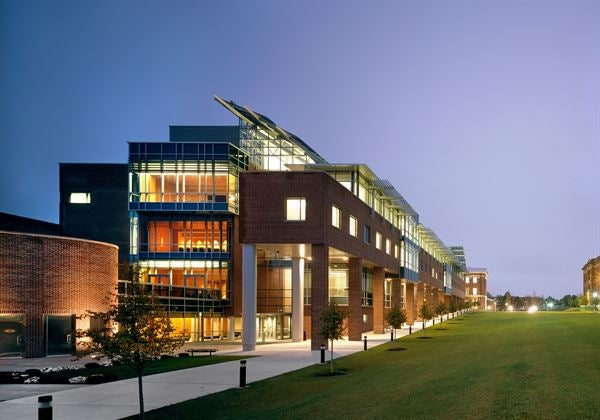
The move toward institutionalizing this social movement within chemistry is indicated by the fact that there now is an annual Gordon Conference on Green Chemistry, which joins more than a dozen other Gordon conferences covering major facets of the natural sciences. OECD's Chemical Risk Management Program held a Workshop on Sustainable Chemistry in Venice in October 1998. The International Union for Pure and Applied Chemistry will focus on green chemistry at its 2001 conference in Brisbane. CHEMRAWN (Chemical Research Applied to World Needs) is planning an international conference directed partly at decision makers, journalists, and other non-experts. Chemical and Engineering News has begun to feature articles on the subject. And it was the so-called "Reinventing Government" initiative of the Clinton-Gore Administration that created the award competition discussed above. The newly formed Green Chemistry Institute is co-sponsoring nearly a dozen conferences in 1998 and 1999. The main Chinese technological university, possibly leapfrogging western universities with greater institutional momentum and fixed capital, has recently opened a brand new building for green chemistry. And a committee of the American Chemical Society is at work attempting to revise chemistry textbooks and curricula.
These many signs of life notwithstanding, as in most social institutions there is in chemistry and chemical engineering considerable cognitive, institutional, and other momentum standing in the way of the. This is about as true in universities as it is in industry and government. When a prestigious Australian chemistry chair proposed to his department a half dozen good reasons to switch from their outmoded division among physical, organic, and inorganic chemistry to an organizational form more in keeping with contemporary practice, he provoked outrage and the best he could obtain was a study committee. Asked to come up with any good reason for maintaining the current substructure of the department, the committee majority responded, "That's the way it's done at Harvard and Chicago."
Suppositions about what is and is not a promising line of development likewise exert influence not always in proportion to the validity of the reasoning. One of the hot areas in green chemistry is that of trying to move toward solventless processes, or at least synthesis pathways and techniques that use less of the dangerous solvents such as ketone and ether. One of the promising lines of investigation among green chemistry researchers working on solvent replacement concerns the use of supercritical fluids, particularly carbon dioxide. The basics of scCO2 have been understood for about a century, yet until recently there were only a handful of chemical processes utilizing the technique, of which the best known is that of decaffeinating coffee.
Opinions differ on why this has been so. Some point to the capital expense of building equipment to operate at the temperatures and pressures necessary for achieving supercriticality. This seems a bit questionable, in that the pressures involved are only about 4000 pounds per square inch, and the temperatures are within the range often found in industrial practice. Other observers nominate maintenance difficulties and costs as the culprit. Still others argue that safety is harder to assure when dealing with pressurized systems. No doubt there is validity in these claims, but given the life cycle costs and environmental-social costs of many petroleum-based solvents, it seems pretty clear that a huge number of chemists in and out of industry have for decades not been paying appropriate attention to the potential advantages of scCO2 and other supercritical fluids (SCFs).
A university professor working on SCF in the UK suggests that the explanation rests partly with the faddish way new techniques sometimes are approached. There have been recurrent cycles, he says, in attention to SCF potentials. Typically the potential is oversold as enthusiasts propose and try out fancy schemes far beyond the existing state of knowledge; when these fail, interpretations hold that SCF has not worked out, and attention turns to some other hot topic. An obvious alternative would be patient, steady exploration of whatever fundamental questions remain, coupled with modest chemical and other engineering innovations designed to apply relatively simple SCF technology in relatively simple manufacturing and other processes.
An example of such comes from Materials Technology Limited (MTL) of Reno, Nevada, which has formed a partnership with the Navaho Nation to operate a facility next to the Four Corners Power Plant in the southwestern United States. As the primary raw materials for manufacturing a line of new products, MTL is using waste flyash that formerly had to be hauled away, CO2 from the stacks that formerly was released as a greenhouse gas contribution, and thermal waste heat. Thanks to supercritical technology to turn the CO2 into a solvent, the company is able to achieve molecular bonding that gives the products superior functionality coupled with very light weight.(11) The firm's CEO was unable to get any assistance from the federal government in this start-up venture because "it did not fit into existing environmental programs; and venture capital firms were not interested because the process was deemed too risky." Other green chemistry practitioners report being turned down or downgraded in status because their work seems "too applied" or otherwise not sexy enough.
Ironically, the main innovation here actually was a social one: the entrepreneur set out to create a new business that would sequester carbon dioxide while utilizing waste products from some existing business. He had no specialized training in SCFs, and merely uncovered their potential while doing research to figure out how to make something out of the materials available.
Based on sketchy information, it appears that legislative staff and OMB staff in Washington know very little about the emerging potentials, and have little concept of how if at all green chemistry ought to be used to modify traditional approaches to environmental regulation. There have been a few rumblings about trying to shift the green chemistry initiative from a basis of voluntary cooperation as part of Vice President Gore's "Re-inventing Government" initiative toward a more conventional regulatory endeavor. These rumblings have been firmly resisted by those at EPA who know most about what is happening, and who appear to care most about what they see as a potentially fundamental transformation of chemical knowledge and practice. The top levels at EPA are not very knowledgeable about forefront science, perhaps any science, and the general reputation of the executive office of the president among environmental scientists is pretty low. Several European nations do better on both counts, with Sweden generally regarded as being in the forefront via their Chemical Inspectorate's planned phase out of the most dangerous chemicals.
The dozen or so EPA staffers most directly working on green chemistry and engineering appear uniformly committed to voluntary cooperation with industry, as do most of the chemical researchers I have interviewed (and, of course, industry executives). A number of European government officials do not find the Americans' approach wholly persuasive. It is true that harmonious relations have been preserved with industry and that the GC movement appears to be gaining momentum, if number of conferences and growth in number of interested researchers is an accurate gauge. But with the exception of Rohm and Haas, industry participation at GC conferences has been lackluster, and I have seen no evidence of a massive shift in industry practices or even the precursor behaviors one might expect to find.
This impression is confirmed at least in part by staff at the Chemical Manufacturers Association. That organization, it is true, has cooperated minimally in helping organize at least one green chemistry conference, but responsibility for it was assigned to one of the most junior staff members in the Regulatory Affairs Division. This apparently was because her superiors "did not know how to fit green chemistry into the CMA's organizational structure." The organization's members -- the largest players in the chemical industry -- generally "do not seem very interested in green chemistry."
III. PROPOSALS FOR ACCELERATING
DISCIPLINARY GREENING
There are at least three obvious possibilities for accelerating greening of the discipline and its correlative industrial practice: changing curricula, mandating goals, and improving R&D funding.
Chemistry majors do not study some of the subjects that their world needs them to study, and chemistry professors left to their own accords will not change the curriculum as far or as fast as most outsiders who know anything about the subject would consider warranted. Science faculties are only a bit less notorious than engineering faculties in protecting turf and in loudly asserting that there just isn't time to fit anything new into the curriculum.
In principle, accrediting agencies could force a more rapid pace of curricular adaptation, but in practice ABET and other accrediting organizations have proceeded assertively primarily when it comes to upholding tradition rather than in departing from it. Business executives who sit on boards of trustees and business-oriented alumni tend to complain a bit about university curricula not preparing students for the "real world," but their entreaties generally are resisted by college administrators; and when administrators do attempt to move in serious ways, they generally are outlasted by faculty foot-dragging. This sometimes works well, for many ideas imported from business are silly schemes like TQM or incentive-based budgeting that probably have not worked terribly well even in the business world and usually are grossly ill-suited to academe. But the same deference to the professoriate also slows down or thwarts change that is warranted.
Money, on the other hand, often will succeed in bribing faculty and/or administrators who perceive themselves or their organizations as impecunious. If the Rockefeller Foundation and the U.S. Department of Education and their equivalents elsewhere in the world were to make available large sums for "Innovations in Chemical Education," there is a good chance that those pushing for green chemistry would be more able to push their agendas more successfully.
Professional licensing exams could be instituted, similar to those now required to become a certified professional engineer or architect. And until the institution became encrusted, there would be an opportunity to put questions on the exam that would, in effect, nudge curriculum designers to teach to the exam. If the exam emphasized environmental considerations, then there is a reasonable bet that the curriculum would move in that direction. Any U.S. state is free to institute requirements for professional licensing, and some nations have much stricter licensing than does the U.S.
When medicinal chemistry became a recognized specialty and then when biochemistry became an even larger innovation in teaching and in research, some chemistry departments merely incorporated the new specialties. More commonly, however, the new foci grew homes in other parts of the university, either as separate departments within the school of science, or across campus in medicine, agriculture, or elsewhere. I do not see how an enterprise as hydra-headed as green chemistry could emulate these breakaway endeavors; but those large portions of the emerging field that focus on biological approaches to chemistry obviously might find homes in biology, biochemistry, or other biological-intensive curricula. This would be unfortunate, I believe, because it would allow conventional chemistry to continue without having to take as much account of the emerging understandings and considerations. But it is one way that change occurs in knowledge communities.
Improved R&D Funding
As discussed briefly in Section II, there are some fairly serious funding constraints holding up research in green chemistry and utilization of it. The National Science Foundation Chemistry sections are the primary source for basic research in chemistry, and they of course always have two or three times as many highly ranked proposals as they can fund. Only a handful of impeccable green chemistry proposals are likely to make it through that gauntlet any time soon, given the self-replicating nature of section panels coupled with the bias toward pure over applied research. Again, the biological side of the emerging enterprise may have advantages.
Many green chemistry researchers have received some funding from industry, and with more than 9000 chemical firms in the U.S. alone there obviously are lots of potential sources of support. I have heard stories, however, of seemingly competent researchers with seemingly attractive projects being told by industrial sources to "come back when you have the rest of your ideas worked out and ready to go." Given the lack of high-level interest among industry executives who participate in the Chemical Manufacturers Association, given the general cutback in corporate research disconnected from demonstration and development, and given the increasing focus on near-term profitability throughout the world, it seems unreasonable to suppose that there would be a surfeit of funds for exploring the early stages of innovative ideas.
If traditional funding routes are suspect, and if it is considered too expensive and otherwise risky to set up a costly permanent bureaucracy, a congressionally mandated, time-limited stimulus for targeted basic research in green chemistry could be a reasonable step. There is an argument to be made that chemical industry executives would be pretty decent agents to whom decisions could be delegated regarding which university projects to fund, and that giving them a generous tax credit for payments made under such a program might stimulate considerable activity negotiated between industry R&D departments and their counterparts in universities. If there is a concern that industry executives might merely convert contracts they already were planning for applied research and not really do much to stimulate and pay for additional basic research, a cutout could be developed; for example, an industry association or professional chemists' association could operate a pooled fund stimulating research along the lines of collectively agreed, pre-competitive research priorities. (The Austrian, Italian, and German manufacturers' associations already are doing something of this sort with respect to aiding smaller chemical companies.)
Basic research, though, is not enough, for new ideas and techniques do not move of their own accord into industry: they must be carried there, and often a considerable period (and expense) for demonstration and development must be invested before technically and economically viable processes can be made available. There is a touching faith in some quarters that everything which is not basic university research falls directly into a category of immediate interest to business executives. To the contrary, there is a rather substantial grey area in which fall ideas that no longer require fundamental research by the best university chemists (or research-oriented chemical engineers) but that are not sufficiently processed to be turned into production processes. Who funds such applied research and demonstration that may be too risky or have too long a period prior to payoff -- or that may be of sufficient generality that a sponsoring company could not reasonably expect profitably to appropriate for itself the results of the research?
One answer is the mission agencies, such as the Department of Energy. But most sections of that organization's budget have been steadily cut in real terms. One Lawrence Laboratory scientist expressed bitterness that DOE killed his research project after four years despite the fact that it was on schedule to do exactly what he'd promised. He felt "pressured by DOE to obtain industry funding, but found the businesses he thought needed the technology uninterested: "You have eight of the ten components needed to make it work?, they would ask; well, come back when you develop the other two!" "They just aren't interested in not-yet-ready ideas, even very promising ones." This researcher not surprisingly believes that "there is a big problem transferring scientific knowledge to industry."
In addition to more total funding from government, researchers in many fields stress the desirability of longer-term funding to actually carry through a line of research instead of spending a couple years gearing up and obtaining funding, a few years becoming truly expert in the relevant techniques, and then having the funding shut off as attention to that line of endeavor wanes. Such a pattern is disheartening in any field, but it seems particularly pernicious in fields where social needs cannot be addressed very well without better fundamental or near-fundamental knowledge. "Science politics sometimes are more important than science," a practicing scientist told me recently, with an expression suggesting that I would find that to be news.
Preliminary indications suggest that myriad promising ideas may come into use much slower and much less reliably than would be desirable unless new subsidies and other encouragements are developed. Some of that could include "jawboning," the process by which public officials encourage business executives to take actions in the public interest. This can carry the implied or stated threat of being followed up with regulation if businesses do not comply. The Swedish Chemicals Inspectorate, for example, has mandated a phase out of certain toxic chemicals in manufacturing, and has some 250 on an "observation" list that pretty clearly are destined to be banned. Officials in other nations might credibly threaten to emulate Sweden in this regard.
IV. A FEW OF THE IMPLICATIONS
Much of this story is entirely compatible with present understandings of science studies scholars. No one should be surprised to hear, for example, that those working on applied topics are producing techniques and insights that are stimulating rethinking of more basic chemistry. We all know as well that university science teaching can be a bit backward looking, in part because of turf protection; it may no longer make sense to divide the chemical world into inorganic, organic, and physical chemistry, but it may be entirely sensible for some university professors and their organizations to hang onto the older ways given existing status and other incentive systems. Nor is it yet all that clear just how much of a threat green chemistry ideas pose to established theories and disciplinary structures, for there is quite a bit of latitude within traditional organic chemistry for alternative synthesis pathways, for diverse arrays of end products, and for alternative engineering approaches to production at scale. What's truly new here?
On the other hand, it appears to me as if a sea change is occurring. Concern for students' and chemical plant workers' safety now is on the minds of chemical researchers and chemical industry executives in a way it simply wasn't a few years ago. I spoke with a number of middle-aged chemists who reported washing their hands in dangerous solvents in graduate school, and thinking nothing of it. It probably is an exaggeration to say as one industry chemist recently did that "Every chemical company has to be looking at its product line and wondering, 'What could we do differently to protect the environment,'" but the overstatement makes the point that environmental issues are not too far from the minds of many executives in the larger firms in the more affluent societies.
As quoted on page one, one of my interview subjects went so far as to assert that "Basic organic chemistry texts of the next generation will be absolutely unrecognizable compared with those now is use." I'm skeptical, because I doubt that the basics of reduction, oxidation, methyl groups, and ring-opening polymerization are going to be replaced in the lifetimes of anyone now doing chemistry. But it may well be that biochemistry will move from human to industrial systems as a redefining force, and that bio-catalysis and chemoenzymatic synthesis and other biology-intensive approaches will displace more than a few traditional stoichiometric methods. Assuming that this proves to be the case, so what?
One of the reasons that fewer political scientists study science compared with technology probably is that it is difficult to envision how science could be much different than it now is. It is difficult as well to envision how one of the standard prescriptions of progressive political scientists - more democracy, granting greater influence over scientific research and teaching to the general public or its representatives - could result in improved outcomes. Skeptics could point, for example, to politicians' highly questionable behaviors in creating pork-barrel technological projects that could never pass cost-benefit analyses; skeptics equally well could demonstrate a tendency for legislators in the U.S. to earmark funds for third-rate scientific endeavors instead of relying on peer review. I can hardly dispute the fact of such behaviors, and I grant that critics of the "more democracy" thesis have some good arguments. Whether more democracy across the board would result in better science is a tough question, and I do not tackle it here.(12)
Still, I think the case raises interesting and important questions about whether and in what ways more democratic participation in setting scientific agendas arguably could have made positive contributions to shaping chemistry in the late 20th century. More importantly, it raises questions about where democratic methods might be used in the future to steer science differently and perhaps better. There is not a non-partisan way to evaluate whether science could be steered "better," of course, because every effort to define that term turns out to contain ideological interpretations and personal values. So I make no attempt to be nonpartisan here, and I have to acknowledge that others with different political sentiments might well look at the green chemistry case and come to different conclusions regarding what it has to teach us about science and its social steering.
The lessons I (very tentatively) take away from the green chemistry story derive in part from commonplace understandings:
1. Very substantial damage to environment, workers, and users of chemicals resulted from the actions of chemists and chemical engineers (in collaboration with others) in the 20th century;
2. Many or most of those chemists and chemical engineers devoted relatively little attention to investigating, publicizing, or protecting against the risks of the chemicals with which they worked or the chemical products they helped make available for commerce;
3. Nor did most chemists and chemical engineers seek diligently to find alternative synthesis pathways that would produce fewer waste byproducts of lower hazard;
4. Nor did most chemists and chemical engineers seek to develop (or recommend, if already existing) alternative final products that would take the place of chemical products posing risks.
Knowing what we now do about some potentials from green chemistry, one can infer that many of the environmental and health problems might have been avoided or reduced if chemists and chemical engineers had moved more expeditiously to investigate, develop, and utilize techniques such as those only now emerging under the rubric of green chemistry. What stopped that better outcome from happening is largely conjecture at this point, but we know a few things with some certainty and may be able to string together some useful reasoning.
First, we know that more chemists work for industry more than for any other social institution, and that their pay depends on the continuing good will of corporate executives. Both the great successes and the horrible failings of the past century's chemistry can be traced in part to this relationship.
Second, we know that university chemical researchers are not very accountable for their research or even for their teaching, except to other members of their subfields. This helps insulate them from undue external influence - except perhaps from those awarding grants - but it also partially insulates them from appropriate external influence.
Third, we know that contemporary societies even today do not have well-designed and fully articulated social institutions for monitoring chemistry and chemical engineering, staffed with relevant expertise that is relatively independent from established cliques and hierarchies within chemistry itself. Nor do most nations have satisfactory institutions for interpreting and deliberating about emerging directions, or for setting priorities in a way that integrates broad public concerns with relevant expertise. In the U.S., for example, the House Science Committee, the appropriations subcommittees, and other relevant committees exercise far more sophisticated jurisdiction than what is available in the British or French parliaments, but Congress nevertheless delegates most decision making about chemistry and chemical engineering to the National Science Foundation, the National Research Council, and to the university and industry sectors. That seemed like a fine arrangement to most people for most of the past several generations. But we now come to see that the delegated authority arguably has been abused.
There has been very little sophisticated inquiry and debate concerning the feasibility of fundamentally redesigning the decision-making processes for science oversight and funding. Science fraud and other pressing issues have drawn a fair amount of attention to shortcomings within scientific institutions. But the emphasis has generally not been on substantive research directions, in part because it is widely assumed that only those within a subfield are in a good position to judge which topics most deserve more scrutiny.
My guess is that this assumption goes too far, that in some respects insiders can be exactly the wrong ones to control priorities, because they are wedded to ways of doing things that suit themselves rather than humanity more generally. The basic insight of pluralist political thought is that increasing the diversity of participants brings to light important considerations that are accidentally or willfully neglected when decision making is controlled by those with the greatest stake in the outcome. I see insufficient reason to believe that this would not apply to scientific institutions and the negotiations occurring therein.
Another reason for mounting serious inquiry into the possible role of government regulations and other public participation is that the pendulum seems to be swinging too far in the direction of "cooperation" with industry in many nations. "Co-optation" has just about the same spelling, and, I fear, in some cases the same meaning. One ought to worry when public official after public official, and academic scientist after academic scientist, speaks of "forming research agendas based on industry needs," "Industry + university = new science and new process," "environmental improvement and economic growth are not in conflict," and so forth. I am sure that negotiation often makes sense; but blindly relying on business executives and their employees to serve public purposes does not fit with some of our most reliable understandings from economics and political science concerning market failures/shortcomings and the privileged position of business.
In sum, the case of green chemistry offers fascinating material for rethinking which decisions appropriately can be left to scientists, which to industry, and which to political processes. This preliminary report is just a small down payment on the extended inquiry the subject deserves.
1. 1 This research was supported in part by NSF grant #SBR-9811962, Science and Technology Studies Program, Social & Behavioral Sciences Division. For helpful insights concerning a (possibly) emerging discipline, my thanks to participants in the 2nd Annual Green Chemistry and Engineering Conference: Global Perspectives, National Academy of Sciences, Washington DC, June 30-July 2, 1998, and to participants in the OECD Workshop on Sustainable Chemistry, Fondazione Cini, Venice, Italy, October 15-17, 1998. My thanks as well to Doryen Bubeck for excellent research assistance.
2. 2 Except where otherwise noted, all quoted material is drawn from interviews conducted by the author during 1998 with government officials, university researchers, chemistry students, corporate executives, and interest group representatives -- primarily from the U.S., but also from Britain, Denmark, Germany, Italy, Japan, Sweden, and The Netherlands.
3. 3 A quick introduction to the subject is found in the field's first text: Paul T. Anastas and John C. Warner, Green Chemistry: Theory and Practice, Oxford, 1998. The first books I know on the subject were Stephen C. DeVito and Roger L. Garrett, Designing Safer Chemicals: Green Chemistry for Pollution Prevention, American Chemical Society, Washington, DC, 1996; and Paul T. Anastas and Tracy C. Williamson, eds., Green Chemistry: Designing Chemistry for the Environment, American Chemical Society, Washington DC, 1996.
4. 4 Nominations come from diverse sources, including self-nomination, and finalists are selected by panels of technical experts convened by the American Chemical Society. EPA makes the final selection, after attempting to make sure that the organization ranked first by ACS is not about to make headlines for some environmentally despicable act that would bring the agency into disrepute.
5. 5 A key intermediate in the process is DSIDA (disodium iminodiacetate), traditionally manufactured via the Strecker process using ammonia, formaldehyde, hydrogen cyanide, and hydrochloric acid. Hydrogen cyanide is the worst of these, for its extreme acute toxicity means great care must be taken to protect workers, those living near chemical plants, and the environment.
6. 6 "The Presidential Green Chemistry Challenge Awards Program: Summary of 1996 Award Entries and Recipients," U.S. Environmental Protection Agency, Office of Pollution Prevention and Toxics, July 1996, EPA744-K-96-001, p. 2.
7. 7 "The Presidential Green Chemistry Challenge Awards Program: Summary of 1997 Award Entries and Recipients," U.S. Environmental Protection Agency, Pollution Prevention and Toxics, April 1998, EPA744-S-97-001.
8. 8 Workshop press release, no date, June 1998?.
9. 9 Paolo Giuiuzza, "Italian Chemical Industry and Environmental Issues," presented at the OECD Workshop on Sustainable Chemistry, Venice, October 15, 1998.
10. 10 Barry M. Trost, "Atom Economy."
11. 11 Roger Jones, "Building Products Made from Carbon Dioxide and Fly Ash," presented at the 2nd Annual Green Chemistry and Engineering Conference, Washington, DC, June 30, 1998. A related technology is analyzed in James B. Rubin and Craig M.V. Tyler, "Partial Replacement of Portland Cement with Fly Ashes and Kiln Dusts Using Supercritical Carbon Dioxide Processing," presented at the OECD Workshop on Sustainable Chemistry, Venice, October 15, 1998.
12. 12 But see some of my other work, including (with Susan Cozzens), "Science, Government, and the Politics of Knowledge," pp. 533-553 in Jasanoff et al., Handbook of Science and Technology Studies, Beverly Hills, Sage, 1995.